Real World Deployments
Case Study
London Tube 🇬🇧
Mapping the invisible: Enhancing Air Quality Monitoring in the London Underground and Paris Metro
Mapping the invisible: Enhancing Air Quality Monitoring in the London Underground and Paris Metro
Underground transport networks present a unique environmental challenge. Unlike surface-level pollution driven by combustion engines, the air quality in deep-tube environments like the London Underground—the world’s oldest subway—is defined by different variables. Particulate matter below ground is primarily composed of metallic dust generated from brake wear, wheel friction, and rail abrasion.
With millions of daily journeys, managing these enclosed environments requires more than just standard monitoring; it requires sensors built for industrial-grade resilience.
Underground transport networks present a unique environmental challenge. Unlike surface-level pollution driven by combustion engines, the air quality in deep-tube environments like the London Underground—the world’s oldest subway—is defined by different variables. Particulate matter below ground is primarily composed of metallic dust generated from brake wear, wheel friction, and rail abrasion.
With millions of daily journeys, managing these enclosed environments requires more than just standard monitoring; it requires sensors built for industrial-grade resilience.
A Consortium for Subsurface Innovation
To address these challenges, Persium has joined a high-level consortium including Transport for London (TfL), RATP (Paris), and Imperial College London. This initiative, supported by EIT Urban Mobility, focuses on deploying low-cost, high-accuracy sensing technology specifically designed to survive and thrive in subsurface conditions.
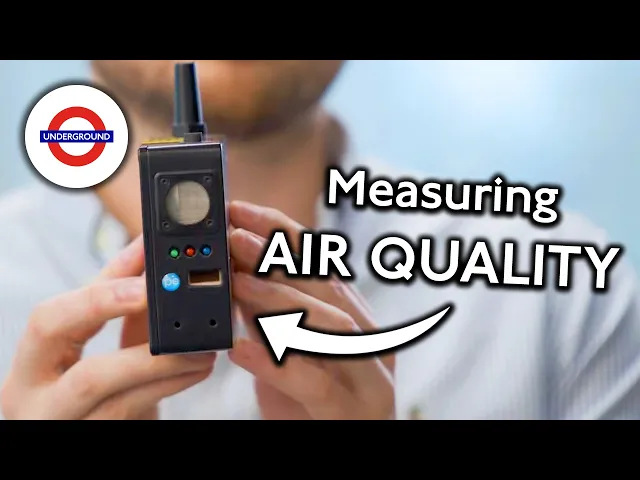
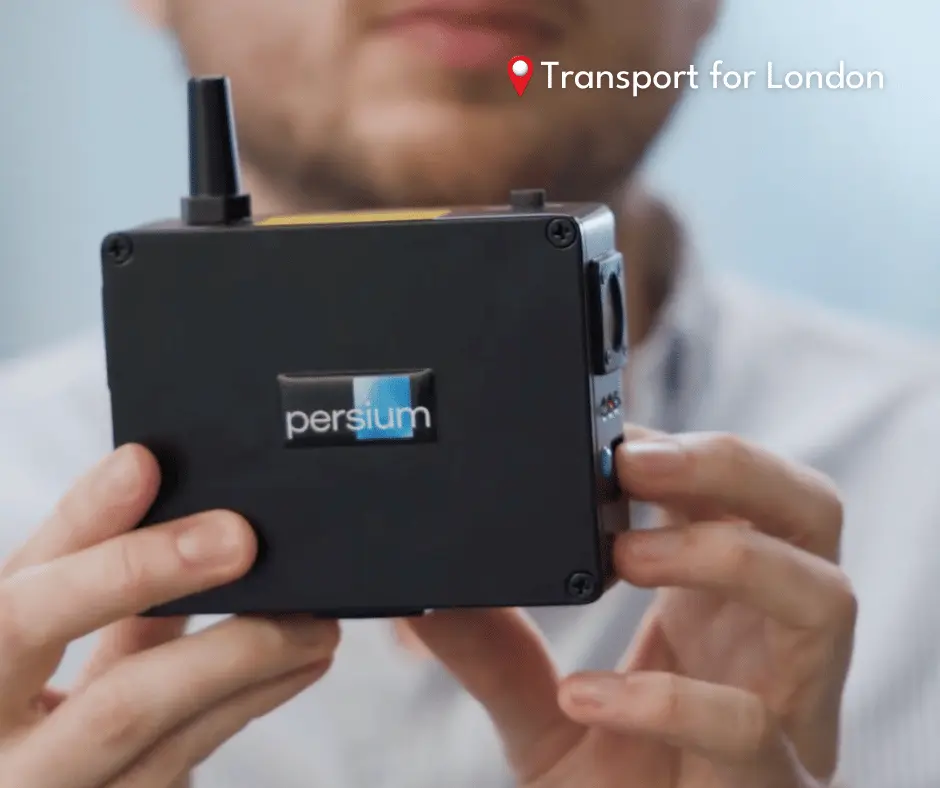
Standard surface sensors often struggle with the high particulate loads found in tunnels. The Persium Pods deployed in this project leverage technology originally refined for steel plants, featuring specialized casings and self-cleaning mechanisms to ensure data integrity remains uncompromised by heavy metallic dust.
To address these challenges, Persium has joined a high-level consortium including Transport for London (TfL), RATP (Paris), and Imperial College London. This initiative, supported by EIT Urban Mobility, focuses on deploying low-cost, high-accuracy sensing technology specifically designed to survive and thrive in subsurface conditions.
Standard surface sensors often struggle with the high particulate loads found in tunnels. The Persium Pods deployed in this project leverage technology originally refined for steel plants, featuring specialized casings and self-cleaning mechanisms to ensure data integrity remains uncompromised by heavy metallic dust.
High-Resolution Environmental Intelligence
These deployments enable high-resolution monitoring across the metro network, capturing a comprehensive suite of data points within a single platform:
Particulate Matter: Real-time tracking of PM1, PM2.5, and PM10.
Gas & VOCs: Monitoring CO₂ and Volatile Organic Compounds.
Atmospheric Conditions: Precise readings of temperature, pressure, humidity, and noise.
Shaping the Future of Urban Mobility
Maintaining healthy environments is essential to the long-term sustainability of public transit. By combining advanced sensing hardware with geospatial software, Persium is helping global cities understand—and manage—the air in the spaces where millions of people move every day.
High-Resolution Environmental Intelligence
These deployments enable high-resolution monitoring across the metro network, capturing a comprehensive suite of data points within a single platform:
Particulate Matter: Real-time tracking of PM1, PM2.5, and PM10.
Gas & VOCs: Monitoring CO₂ and Volatile Organic Compounds.
Atmospheric Conditions: Precise readings of temperature, pressure, humidity, and noise.
Shaping the Future of Urban Mobility
Maintaining healthy environments is essential to the long-term sustainability of public transit. By combining advanced sensing hardware with geospatial software, Persium is helping global cities understand—and manage—the air in the spaces where millions of people move every day.
See how Persium works in the real world.
See how Persium works in the real world.