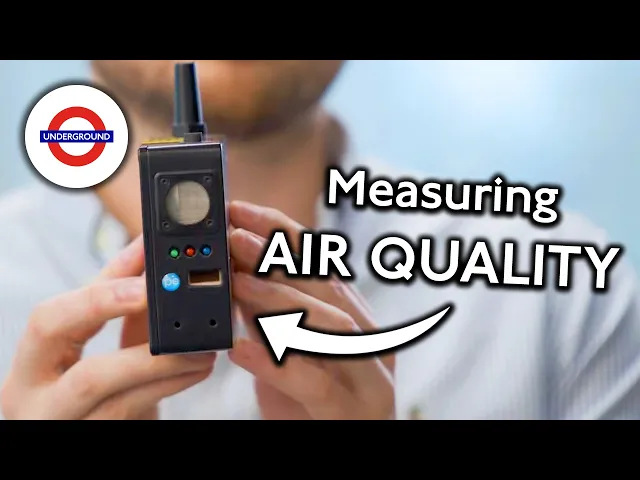
Designed for continuous outdoor deployment across real-world environments.
Transport for London 🇬🇧
Persium Case Study
Air quality monitoring in partnership with Transport for London, RATP, and Imperial College London.
RECAP
Project Summary
Persium has joined a high-level consortium including Transport for London (TfL), RATP (Paris), and Imperial College London, supported by EIT Urban Mobility, to deploy specialised air quality sensors across subsurface metro environments.
Unlike surface-level pollution, underground air quality is dominated by metallic particulate matter generated from brake wear, wheel friction, and rail abrasion.
Persium Pods are engineered with specialised casings and self-cleaning mechanisms to maintain data integrity under the extreme particulate loads found in deep-tube tunnels.
The Challenge
Underground transport networks present an environmental monitoring challenge that standard surface sensors cannot meet. In deep-tube environments like the London Underground, the world's oldest subway, particulate matter is primarily metallic, generated continuously by the friction of brakes, wheels, and rails.
High particulate loads rapidly compromise standard sensor performance. With millions of daily journeys across both networks, understanding and managing air quality in these enclosed environments requires sensors purpose-built for industrial-grade conditions.
Persium
Deployment
Persium Pods deployed across the London Underground and Paris Metro are engineered specifically for subsurface performance, drawing on technology originally refined for steel plant environments, with specialised casings and self-cleaning mechanisms designed to maintain accuracy under sustained heavy metallic dust exposure.
Parameters monitored include:
Particulate Matter: PM1, PM2.5, and PM10
CO₂ and Volatile Organic Compounds (VOCs)
Temperature, pressure, humidity, and noise
Monitoring through Dashboard & MapView
All data streams into Persium Dashboard & MapView, providing transport authorities with a live, networked view of air quality conditions across stations and tunnel sections. This enables:
Real-time identification of pollution peaks and troughs across the network
Evidence-based targeting of track cleaning and air filtration interventions
Trend analysis to assess the impact of maintenance and operational changes
Continuous monitoring of passenger and worker exposure conditions
Moving transport authorities from general maintenance schedules to targeted, data-driven interventions.
What This Enables
Continuous, high-resolution monitoring across subsurface networks gives TfL and RATP the intelligence to manage commuter air quality proactively, optimising track cleaning, refining filtration strategies, and demonstrating environmental performance across some of the world's most heavily used public transport infrastructure.
Managing the air where millions of people move every day.
Talk to our team about deploying Persium across your transport network or infrastructure environment.