Use Case
Transport & Traffic Management
Transport & Traffic Management
Traffic emissions are hyperlocal. A junction 200 metres from a background monitoring station can experience NO₂ concentrations twice as high as the reading being reported. Yet most transport authorities, urban planners, and mobility teams are still making decisions based on averages from a handful of fixed stations, without the street-level, corridor-specific data that would tell them where interventions are actually needed, whether they're working, and what to tell the public.
Traffic emissions are hyperlocal. A junction 200 metres from a background monitoring station can experience NO₂ concentrations twice as high as the reading being reported. Yet most transport authorities, urban planners, and mobility teams are still making decisions based on averages from a handful of fixed stations, without the street-level, corridor-specific data that would tell them where interventions are actually needed, whether they're working, and what to tell the public.
THE CHALLENGE
Pollution levels can change dramatically from one street to the next. Most transport networks have no way to see it.
Pollution levels can change dramatically from one street to the next. Most transport networks have no way to see it.
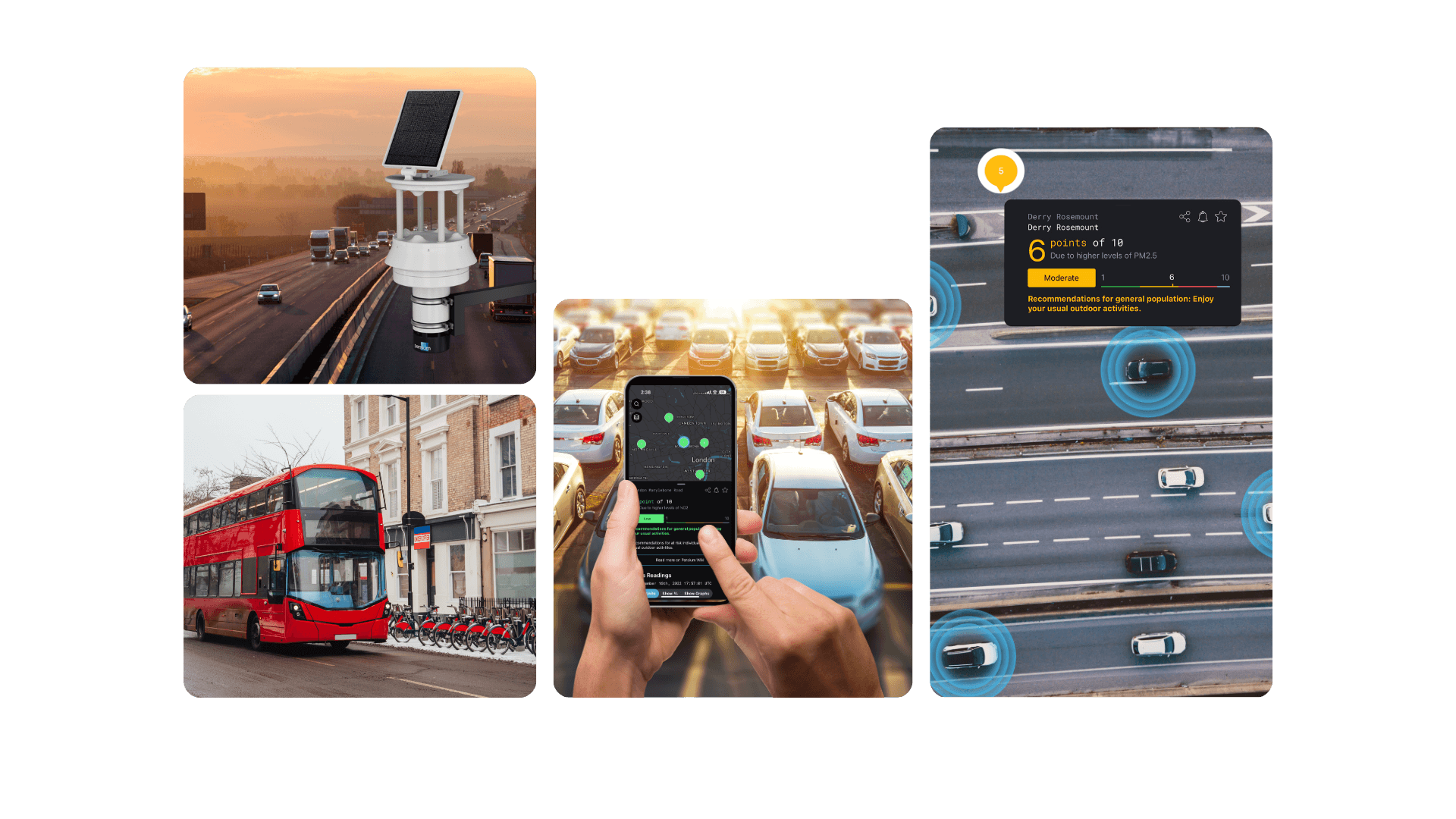
Persium deploys sensor networks along roads, junctions, transport corridors, CAZ boundaries, and underground environments, capturing continuous, hyperlocal air quality data where traffic emissions are highest. Wind data from every sensor adds spatial context, showing how pollution builds, disperses, and changes throughout the day as traffic patterns shift. All data streams into Persium's Dashboard and MapView, giving transport teams the evidence they need to plan, evaluate, and report with confidence.
Persium deploys sensor networks along roads, junctions, transport corridors, CAZ boundaries, and underground environments, capturing continuous, hyperlocal air quality data where traffic emissions are highest. Wind data from every sensor adds spatial context, showing how pollution builds, disperses, and changes throughout the day as traffic patterns shift. All data streams into Persium's Dashboard and MapView, giving transport teams the evidence they need to plan, evaluate, and report with confidence.
WHAT PERSIUM DOES
Street-level emissions data across roads, corridors, and transport networks, in real time.
Street-level emissions data across roads, corridors, and transport networks, in real time.
Clean Air Zone monitoring
Track NO₂ and particulate levels along CAZ boundaries before, during, and after implementation, generating the before-and-after evidence that demonstrates whether the zone is delivering measurable improvement. Data that holds up in a scrutiny committee or a ministerial review.
Traffic corridor analysis
Identify which roads, junctions, and peak periods generate the highest exposure, and design interventions that target the right locations at the right times. No more guesswork about where to prioritise.
Underground and subsurface monitoring
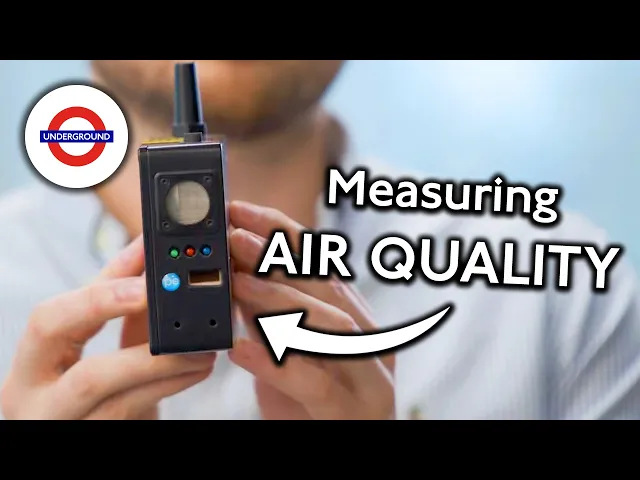
Enclosed transport environments generate metallic particulate matter from brake wear, wheel friction, and rail abrasion that standard surface sensors cannot measure. Persium's specialised sensors maintain accuracy under heavy particulate loads, deployed in partnership with Transport for London across the London Underground.
Multimodal emissions comparison
Monitor road, rail, river, and aviation transport in the same connected network, understanding the full picture of urban transport emissions and their relative contribution to community exposure.
Policy evaluation
Measure whether traffic restrictions, fleet electrification, infrastructure redesigns, or low emission zone extensions are delivering measurable air quality improvements. Continuous data before, during, and after intervention.
Public and community reporting
Share transparent, real-time air quality data with residents, community groups, and stakeholders along affected routes, building trust and demonstrating accountability.
Clean Air Zone monitoring
Track NO₂ and particulate levels along CAZ boundaries before, during, and after implementation, generating the before-and-after evidence that demonstrates whether the zone is delivering measurable improvement. Data that holds up in a scrutiny committee or a ministerial review.
Traffic corridor analysis
Identify which roads, junctions, and peak periods generate the highest exposure, and design interventions that target the right locations at the right times. No more guesswork about where to prioritise.
Underground and subsurface monitoring
Enclosed transport environments generate metallic particulate matter from brake wear, wheel friction, and rail abrasion that standard surface sensors cannot measure. Persium's specialised sensors maintain accuracy under heavy particulate loads, deployed in partnership with Transport for London across the London Underground.
Multimodal emissions comparison
Monitor road, rail, river, and aviation transport in the same connected network, understanding the full picture of urban transport emissions and their relative contribution to community exposure.
Policy evaluation
Measure whether traffic restrictions, fleet electrification, infrastructure redesigns, or low emission zone extensions are delivering measurable air quality improvements. Continuous data before, during, and after intervention.
Public and community reporting
Share transparent, real-time air quality data with residents, community groups, and stakeholders along affected routes, building trust and demonstrating accountability.
Monitoring Applications
What transport teams use Persium for.
What transport teams use Persium for.
The revised EU Air Quality Directive (2024) tightens NO₂ limits from 40 µg/m³ to 20 µg/m³, with compliance required by 2030. In the UK, local authorities must demonstrate progress against national air quality objectives under the Environment Act 2021, with Clean Air Zones now operational in multiple cities. Transport is the primary emission source in most urban environments. The monitoring infrastructure to demonstrate compliance — and the policy leverage to act on it, requires data at street level, not regional averages.
The revised EU Air Quality Directive (2024) tightens NO₂ limits from 40 µg/m³ to 20 µg/m³, with compliance required by 2030. In the UK, local authorities must demonstrate progress against national air quality objectives under the Environment Act 2021, with Clean Air Zones now operational in multiple cities. Transport is the primary emission source in most urban environments. The monitoring infrastructure to demonstrate compliance, and the policy leverage to act on it, requires data at street level, not regional averages.
REGULATORY CONTEXT
Transport authorities are under increasing pressure to demonstrate air quality improvement, not just intent.
Transport authorities are under increasing pressure to demonstrate air quality improvement, not just intent.
Persium is deployed in the London Underground, in partnership with Transport for London, RATP, and Imperial College London, monitoring metallic particulate matter in subsurface environments that standard sensors cannot operate in. On the River Thames, Persium monitors vessel emissions for the Port of London Authority, connecting river transport to community-level air quality across Southwark. In Westminster, street-level sensor networks connect traffic-related pollution data to the Westminster Health Index.
Persium is deployed in the London Underground, in partnership with Transport for London, RATP, and Imperial College London, monitoring metallic particulate matter in subsurface environments that standard sensors cannot operate in. On the River Thames, Persium monitors vessel emissions for the Port of London Authority, connecting river transport to community-level air quality across Southwark. In Westminster, street-level sensor networks connect traffic-related pollution data to the Westminster Health Index.
DEPLOYED IN THE FIELD
Persium is already monitoring across London's transport network and beyond.
Persium is already monitoring across London's transport network and beyond.
Managing air quality across a transport network or urban corridor?
Managing air quality across a transport network or urban corridor?