Underground environments produce a pollution profile found nowhere else in the urban landscape.


Below ground, the dominant particulate is not combustion soot, it is metallic dust generated by the continuous friction of brakes, wheels, and rails. These particles are ultrafine, often sub-PM1, and highly respirable. In deep-tube networks like the London Underground, concentrations can exceed surface-level readings by an order of magnitude.


Standard surface sensors fail quickly in these conditions. The heavy particle loads, confined geometry, and absence of wind dispersal create an environment that overwhelms conventional monitoring hardware within weeks.


Yet most metro operators have no continuous monitoring in place at all. Periodic sampling gives a snapshot; it cannot capture the variation between peak service and overnight maintenance, or identify which stations or sections are driving the worst exposure.


THE CHALLENGE

Persium gives metro operators continuous, subsurface-grade air quality data to protect passengers, satisfy regulators, and direct maintenance where it’s actually needed.

Persium gives metro operators continuous, subsurface-grade air quality data to protect passengers, satisfy regulators, and direct maintenance where it’s actually needed.

Subsurface-grade sensor hardware Persium Pods are engineered for industrial resilience. Technology originally refined for steel plant environments, with specialised casings and self-cleaning mechanisms, means sensors maintain data integrity under the high metallic particulate loads that defeat standard monitoring hardware.

Ultrafine and metallic particulate monitoring Real-time tracking of PM0.3, PM1, PM2.5, and PM10 gives operators visibility of the full particle size spectrum. Metallic brake and wheel dust concentrates in the sub-PM1 range where health risk is highest and standard monitoring is weakest.

Station and tunnel-level resolution Deploy across individual stations, platform environments, interchange concourses, and tunnel sections. MapView provides a live geospatial view of the network, so you can see exactly where concentrations peak, and when.


Passenger and worker exposure assessment Continuous data across occupied spaces enables realistic assessment of passenger dwell-time exposure and staff occupational risk, the evidence base regulators and health authorities are increasingly requiring.

Maintenance scheduling and intervention targeting Data-driven track cleaning and ventilation adjustment replaces fixed schedules with evidence-based decisions. Know which sections need attention, not just when the calendar says so.

Integration with existing systems Persium's open API feeds data into existing transport management platforms, SCADA systems, or public dashboards. No proprietary lock-in; your data, in the systems you already use.

WHAT PERSIUM DOES
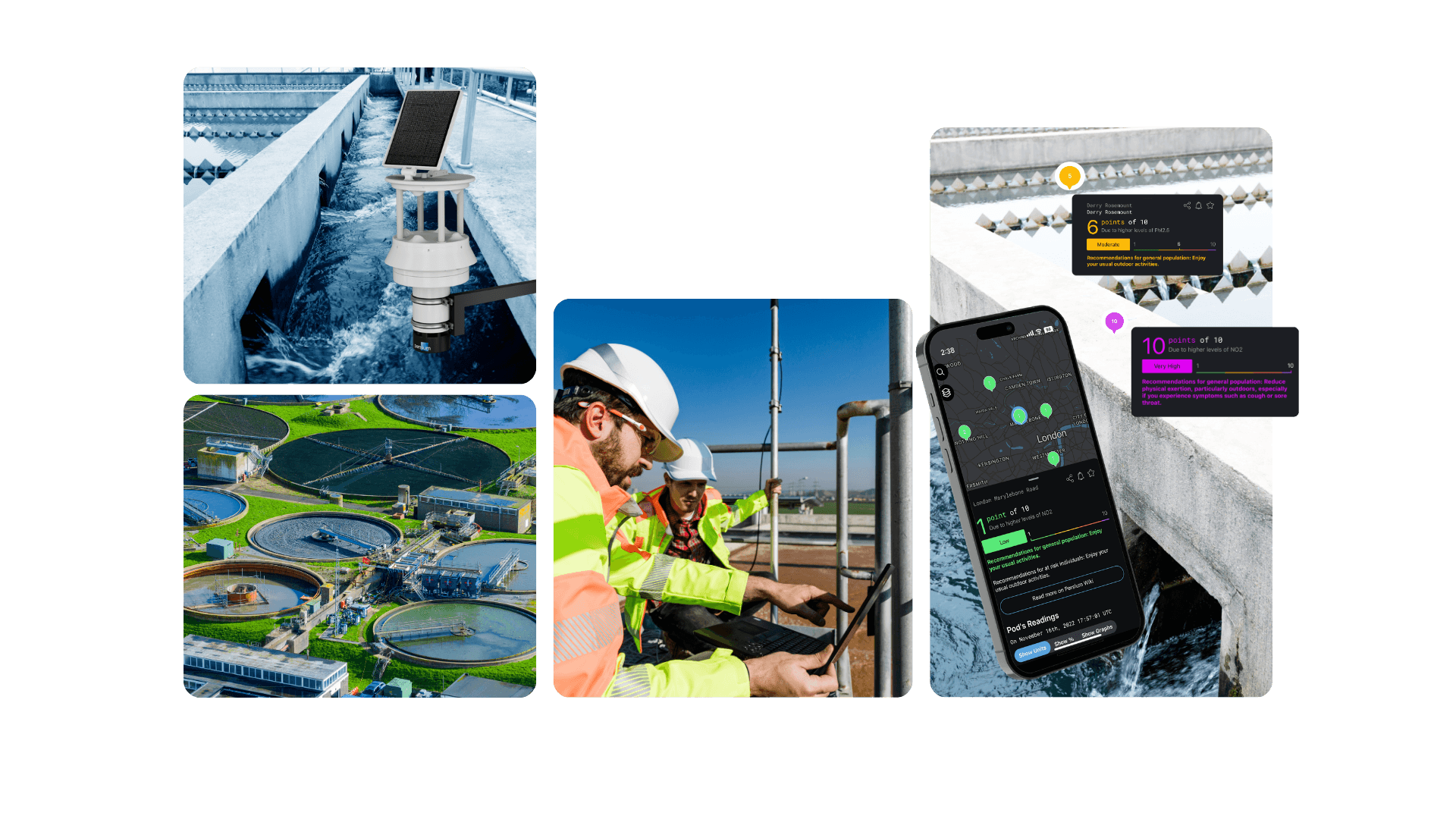
Continuous visibility across your tunnels, platforms, and passenger spaces.

Continuous visibility across your tunnels, platforms, and passenger spaces.

Monitoring Applications

What metro operators use Persium for.

Passenger exposure reporting for health authorities and transport regulators. Occupational health compliance for platform staff and maintenance crews working in enclosed tunnel environments. Evidence-based ventilation optimisation — knowing when and where to run extraction harder, not running it continuously on assumption. Track and brake maintenance scheduling driven by particulate accumulation data rather than fixed intervals. Indoor air quality benchmarking across a network to identify chronic hotspots versus transient event-driven peaks. Post-incident air quality clearance verification following track fires, smoke events, or engineering works.

In the United Kingdom, the Underground Operators Code and Transport for London's internal air quality commitments set expectations for particulate monitoring in enclosed environments. The UK Environment Act 2021 strengthens the statutory basis for air quality reporting across transport infrastructure.


Across Europe, the EU Air Quality Directive (2024) extends the scope of monitoring obligations to include major indoor public spaces. Metro networks in France, Germany, Italy, and Spain are increasingly subject to scrutiny from public health authorities and national environment agencies on underground particulate concentrations, particularly PM2.5 and PM1 from metallic sources.


In the Gulf and Asia-Pacific, new metro operators, from Riyadh Metro to Singapore MRT to Dubai Metro, face public health pressure and international benchmarking expectations that make continuous monitoring a governance expectation, not just a technical aspiration.

Across all of these frameworks, periodic sampling is being replaced by continuous, network-wide monitoring as the credible standard.

REGULATORY CONTEXT

Underground air quality requirements are tightening across major networks.

Underground air quality requirements are tightening across major networks.

Persium is part of a high-level consortium including Transport for London (TfL), RATP (Paris Metro), and Imperial College London, supported by EIT Urban Mobility. Sensor networks have been deployed across tunnel and platform environments in both networks, capturing PM0.3, PM1, PM2.5, PM10, CO₂, VOCs, temperature, humidity, pressure, and noise from a single platform.

All data feeds into Persium MapView, providing live geospatial intelligence across each network, enabling operators to move from scheduled maintenance to targeted, evidence-led interventions.


DEPLOYED IN THE FIELD

Already monitoring underground environments across London and Paris.

Already monitoring underground environments across London and Paris.

Monitoring air quality across a metro network or underground environment?

Monitoring air quality across a metro network or underground environment?