Indoor air quality (IAQ) has become a critical consideration for buildings of all types, from offices and schools to hospitals, airports, and residential developments. As awareness grows, so does the number of indoor air quality sensors on the market. But not all sensors are designed for the same purpose, and choosing the wrong one can lead to misleading data or missed risks.
This guide explains what indoor air quality sensors actually measure, what matters most when selecting one, and how to match sensors to real-world use cases.
Which Pollutants Should an Indoor Sensor Measure?
One of the most common mistakes when buying an IAQ sensor is focusing on a single pollutant, usually CO₂. While useful, CO₂ alone does not represent overall indoor air quality.
A well-designed indoor air quality sensor should measure a combination of pollutants, including:
CO₂ (carbon dioxide) – Indicates ventilation effectiveness and occupancy
PM2.5 (fine particulate matter) – Linked to long-term health risk and indoor–outdoor pollution transfer
PM0.3 / PM1 – Ultrafine particles that penetrate deeper into the body and are often missed
VOCs (volatile organic compounds) – Emitted by furnishings, cleaning products, and building materials
NO₂ (nitrogen dioxide) – Relevant in buildings near roads or with combustion sources
Measuring multiple pollutants allows building operators to understand cause and effect, not just symptoms.
Persium monitoring systems measure a comprehensive range of gaseous and particulate pollutants, including nitrogen dioxide (NO₂), nitric oxide (NO), ozone (O₃), sulfur dioxide (SO₂), carbon monoxide (CO), carbon dioxide (CO₂), hydrogen sulfide (H₂S), ammonia (NH₃), volatile organic compounds (VOCs), methane (CH₄), and mercaptans (CH₃SH). Particulate matter is captured across multiple size fractions, PM0.3 (ultrafine particles), PM1, PM2.5, and PM10, providing detailed insight into both combustion-related emissions and broader environmental exposure.
Environmental Parameters Matter Too
Pollutant readings only make sense when viewed in context. Indoor air quality sensors should also track key environmental conditions, such as:
Temperature
Humidity
Pressure
These parameters influence how pollutants behave, how comfortable a space feels, and how effectively ventilation systems operate. Without them, data interpretation is incomplete.
Why Sensor Quality Matters
At small scale, inaccurate sensors are inconvenient. At building or portfolio scale, they are a liability.
When evaluating sensors, look for:
Stability over time, not just factory accuracy
Resistance to drift, especially in variable humidity environments
Clear calibration and servicing expectations
Proven performance in real occupied spaces, not just labs
Cheap sensors may appear attractive, but inconsistent data quickly erodes trust and limits decision-making.
Continuous Monitoring vs One-Time Testing
Many buildings still rely on spot measurements or annual air quality tests. While useful for baseline checks, these approaches often miss:
Daily and weekly occupancy patterns
Seasonal changes in ventilation performance
Short-term pollution spikes from activities or outdoor sources
Ongoing indoor air quality degradation over time
As building standards evolve, this limitation is becoming more apparent. Under LEED v4.1 and the latest LEED v5, there is a clear shift toward continuous indoor air quality monitoring over one-time testing, particularly within the Indoor Environmental Quality (IEQ) category.
Continuous monitoring provides time-stamped, comparable data that shows how a building actually performs day after day. This makes it far more effective for managing ventilation, supporting occupant health, and demonstrating ongoing compliance with modern IAQ guidelines and green building certifications such as LEED.
Data Access and Usability
An indoor air quality sensor is only as useful as the data it provides.
Before buying, consider:
How easily data can be accessed and exported
Whether trends and comparisons are visible
If alerts and thresholds can be set
How indoor data integrates with wider building or outdoor air quality data
Dashboards should support decisions, not just display numbers.
Matching Sensors to Real Use Cases
Different environments place different demands on IAQ sensors:
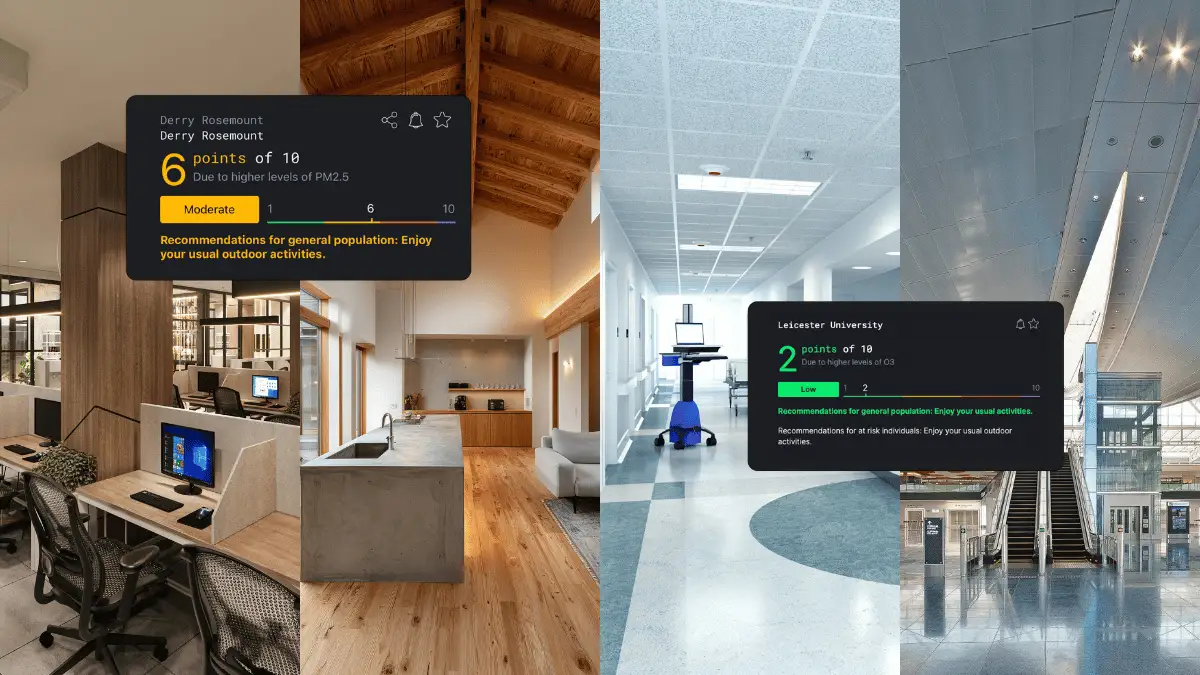
Schools and universities need clear insight into CO₂, particulates, and ventilation during occupied hours.
Offices benefit from linking air quality to comfort, productivity, and wellbeing.
Airports and transport hubs require robust monitoring in high-occupancy, variable airflow spaces.
Healthcare and laboratories demand accuracy, reliability, and traceable data.
How Persium Approaches Indoor Air Quality Monitoring
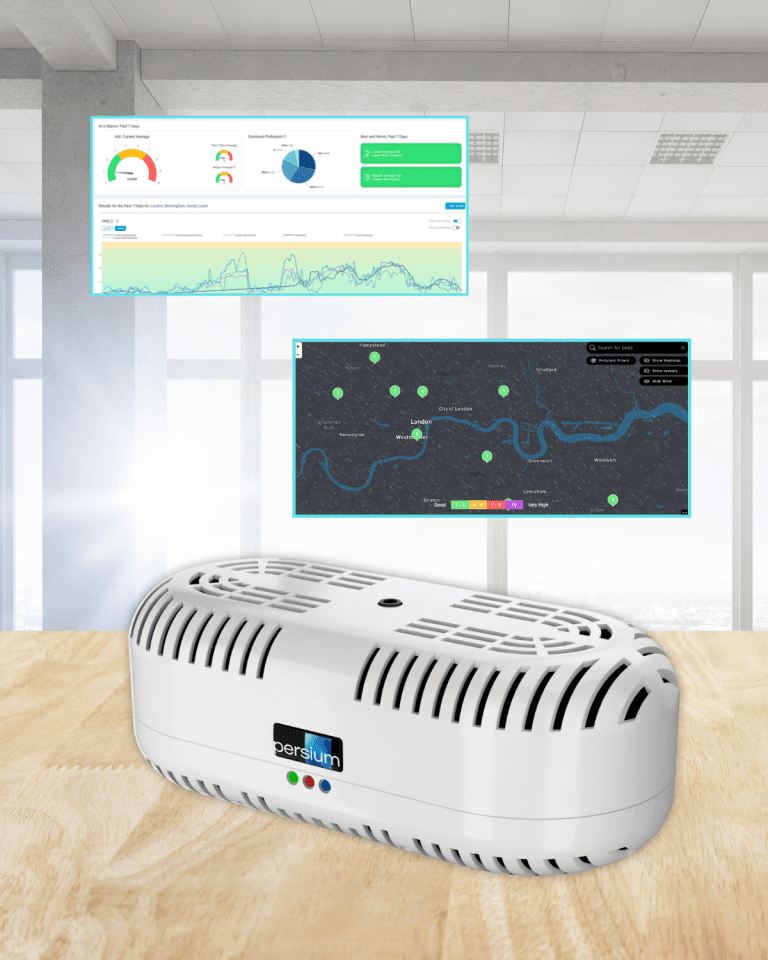
Persium’s approach to indoor air quality monitoring is based on continuous, multi-parameter measurement rather than isolated tests. The Indoor Persium Pod is designed for real-world buildings, where air quality shifts throughout the day due to occupancy, ventilation, and external conditions.
Indoor Persium Pods provide real-time data access, advanced analytics, and easy data export through a secure, user-friendly dashboard, allowing users to turn measurements into meaningful insight.
The Indoor Pod is Persium’s flagship indoor sensor, developed for high-precision research and advanced indoor air quality studies. Accurately calibrated sensors capture both key indoor pollutants and environmental conditions, supporting long-term exposure analysis rather than short-term snapshots.
Fully customisable deployments enable tailored monitoring for indoor exposure, health impact studies, or occupancy and ventilation analysis, offering greater flexibility and data quality than off-the-shelf indoor sensors.