
Use Case
Wet Bulb Globe Temperature (WBGT)
Wet Bulb Globe Temperature (WBGT)
Heat stress is consistently underestimated when organisations rely on air temperature alone. In reality, humidity, solar radiation, and low airflow compound physiological strain significantly, sometimes pushing risk into dangerous territory without any obvious warning signs.
A 35°C day with high humidity and low wind can be far more dangerous than a 40°C day with shade and airflow. Without continuous, location-specific WBGT data, it is impossible to identify unsafe conditions in real time, adjust work schedules proactively, or demonstrate that appropriate measures were taken to protect workers during extreme heat events.
Heat stress is consistently underestimated when organisations rely on air temperature alone. In reality, humidity, solar radiation, and low airflow compound physiological strain significantly, sometimes pushing risk into dangerous territory without any obvious warning signs.
A 35°C day with high humidity and low wind can be far more dangerous than a 40°C day with shade and airflow. Without continuous, location-specific WBGT data, it is impossible to identify unsafe conditions in real time, adjust work schedules proactively, or demonstrate that appropriate measures were taken to protect workers during extreme heat events.
THE CHALLENGE
Temperature alone doesn't tell you how dangerous the heat actually is.
Temperature alone doesn't tell you how dangerous the heat actually is.
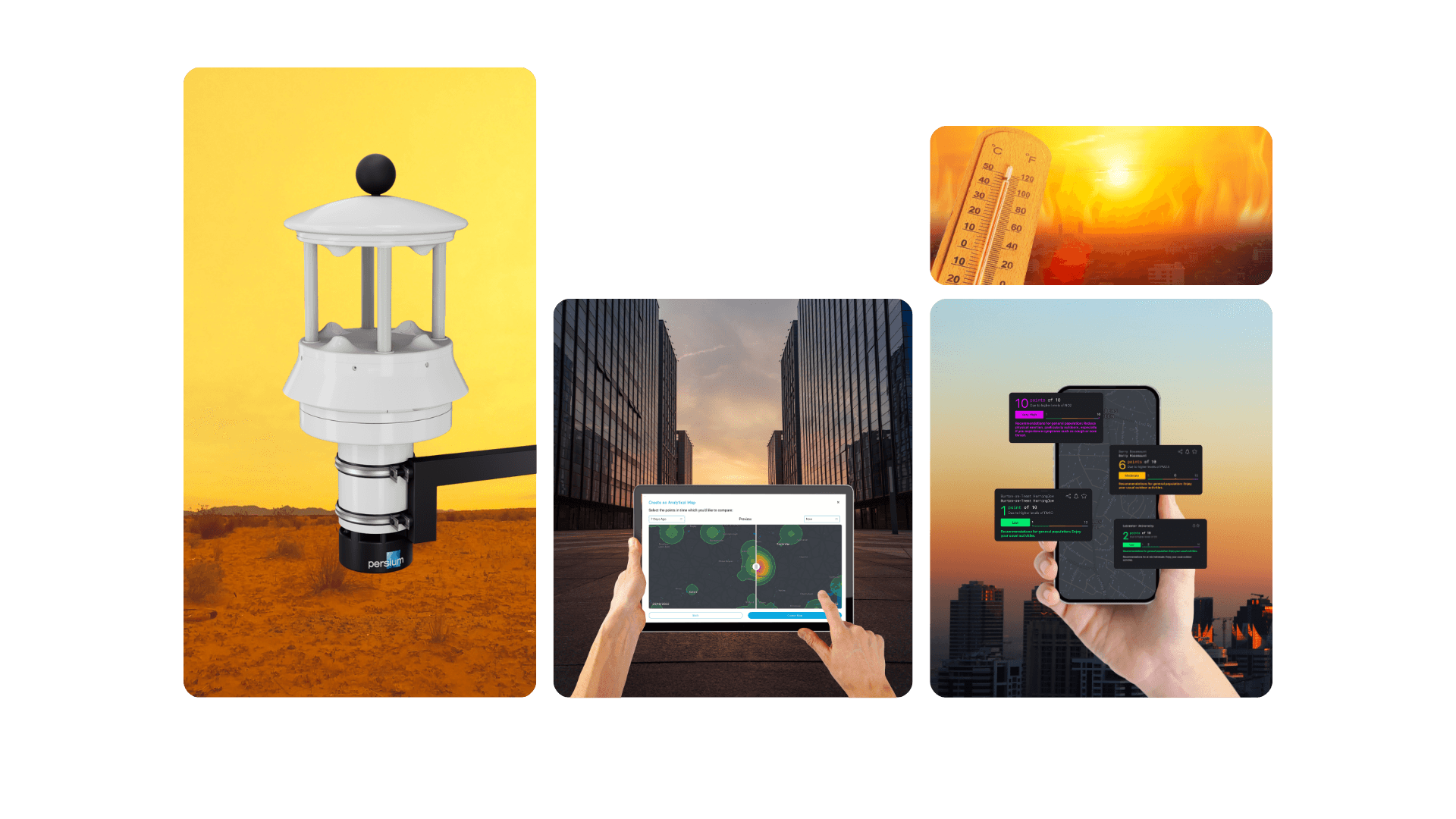
Persium measures every environmental parameter needed to calculate WBGT, temperature, humidity, radiant heat, solar irradiance, and wind speed and direction, continuously, at site level. Real-time WBGT values feed into Persium's Dashboard with configurable threshold alerts, helping site managers implement safe work-rest cycles before conditions become dangerous rather than responding after an incident. All data is time-stamped and exportable, generating the defensible records needed for H&S audits, incident investigations, and regulatory reporting.
Persium measures every environmental parameter needed to calculate WBGT, temperature, humidity, radiant heat, solar irradiance, and wind speed and direction, continuously, at site level. Real-time WBGT values feed into Persium's Dashboard with configurable threshold alerts, helping site managers implement safe work-rest cycles before conditions become dangerous rather than responding after an incident. All data is time-stamped and exportable, generating the defensible records needed for H&S audits, incident investigations, and regulatory reporting.
WHAT PERSIUM DOES
Continuous WBGT monitoring, the full picture of heat stress, in real time.
Continuous WBGT monitoring, the full picture of heat stress, in real time.
Outdoor worker protection
Continuous heat stress monitoring for construction, mining, utilities, logistics, and field operations, guiding safe work-rest cycles based on actual site conditions, not regional weather forecasts.
High-exertion activity management
Identify periods of elevated heat risk across physically demanding tasks and adjust scheduling proactively. WBGT thresholds aligned to ILO, ISO 7243, and regional occupational health standards.
Extreme heat event response
Real-time, site-level WBGT data during heatwaves gives operations and safety teams the intelligence to make immediate decisions, suspending work, relocating personnel, or activating cooling protocols before conditions deteriorate.
Health and safety compliance
Continuous, time-stamped WBGT records provide the defensible evidence base for H&S audits, incident investigations, insurance claims, and regulatory reporting. Proof that appropriate measures were taken, not just intended.
Sports, events, and public spaces
WBGT monitoring for outdoor sports events, marathons, stadiums, and public gatherings, providing real-time heat risk intelligence to event organisers, medical teams, and safety officers.
Outdoor worker protection
Continuous heat stress monitoring for construction, mining, utilities, logistics, and field operations, guiding safe work-rest cycles based on actual site conditions, not regional weather forecasts.
High-exertion activity management
Identify periods of elevated heat risk across physically demanding tasks and adjust scheduling proactively. WBGT thresholds aligned to ILO, ISO 7243, and regional occupational health standards.
Extreme heat event response
Real-time, site-level WBGT data during heatwaves gives operations and safety teams the intelligence to make immediate decisions, suspending work, relocating personnel, or activating cooling protocols before conditions deteriorate.
Health and safety compliance
Continuous, time-stamped WBGT records provide the defensible evidence base for H&S audits, incident investigations, insurance claims, and regulatory reporting. Proof that appropriate measures were taken, not just intended.
Sports, events, and public spaces
WBGT monitoring for outdoor sports events, marathons, stadiums, and public gatherings, providing real-time heat risk intelligence to event organisers, medical teams, and safety officers.
USE CASES
What organisations use Persium WBGT monitoring for.
What organisations use Persium WBGT monitoring for.
In Qatar, outdoor work bans during peak summer hours are enforced by law, with WBGT increasingly cited as the standard for determining when conditions are unsafe. In the UAE and Saudi Arabia, occupational health frameworks are evolving under Vision 2030 and national workforce protection strategies.
In Europe, the EU's proposed Heat at Work Directive is pushing member states toward mandatory heat risk assessments for outdoor workers. Across all of these frameworks, the direction is the same: temperature alone is not sufficient. WBGT is the standard. Persium provides it continuously, at site level, from day one of deployment.
In Qatar, outdoor work bans during peak summer hours are enforced by law, with WBGT increasingly cited as the standard for determining when conditions are unsafe. In the UAE and Saudi Arabia, occupational health frameworks are evolving under Vision 2030 and national workforce protection strategies.
In Europe, the EU's proposed Heat at Work Directive is pushing member states toward mandatory heat risk assessments for outdoor workers. Across all of these frameworks, the direction is the same: temperature alone is not sufficient. WBGT is the standard. Persium provides it continuously, at site level, from day one of deployment.
REGULATORY CONTEXT
Heat stress regulation is tightening across the GCC and globally.
Heat stress regulation is tightening across the GCC and globally.
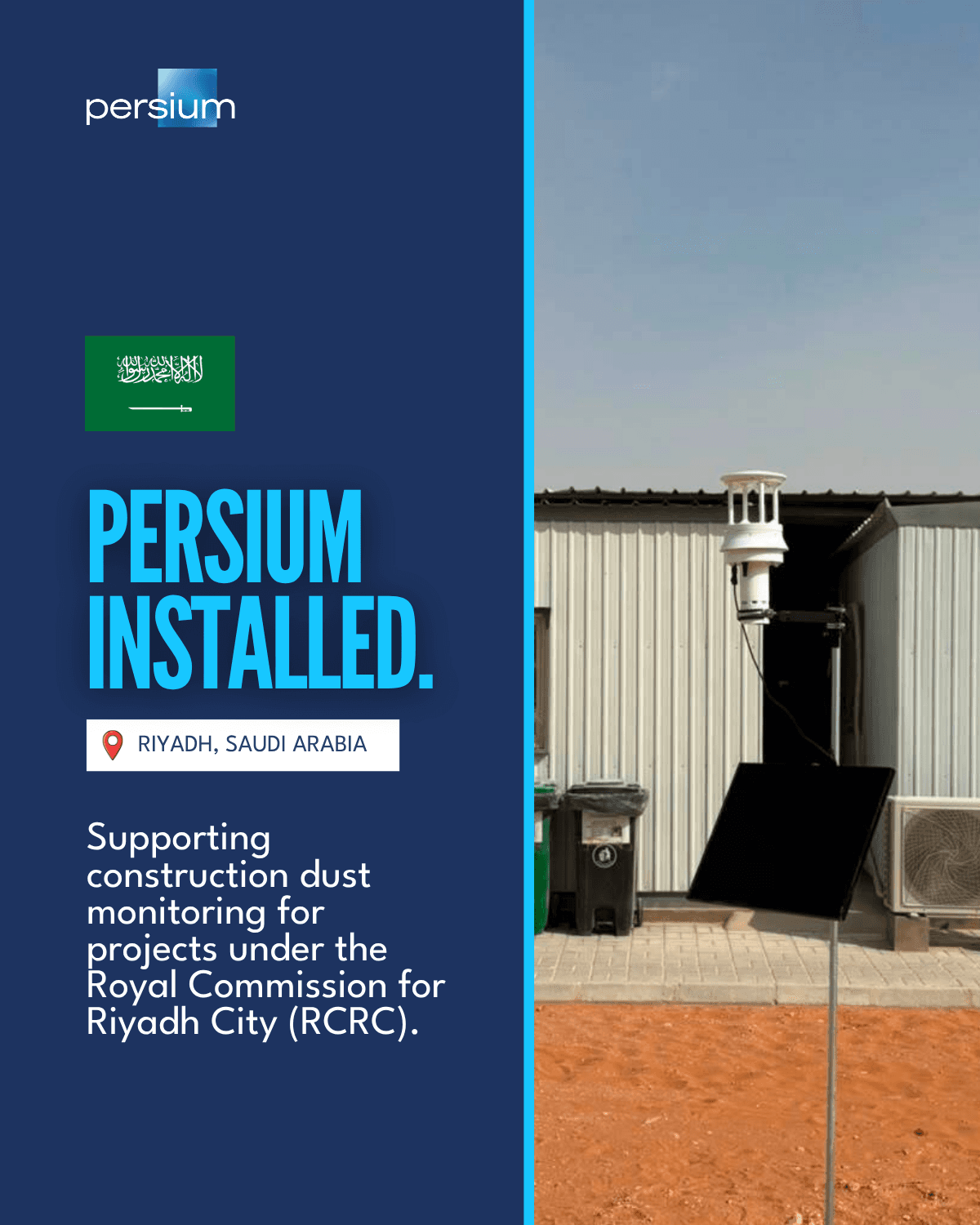
Persium is deployed across construction sites, industrial environments, and outdoor monitoring stations in Qatar, Saudi Arabia, and Abu Dhabi, providing continuous WBGT, Heat Index, Solar Irradiance, and atmospheric monitoring in some of the world's most demanding heat environments. Sensors engineered to operate at temperatures up to +85°C, with solar power and cellular connectivity built in.
Persium is deployed across construction sites, industrial environments, and outdoor monitoring stations in Qatar, Saudi Arabia, and Abu Dhabi, providing continuous WBGT, Heat Index, Solar Irradiance, and atmospheric monitoring in some of the world's most demanding heat environments. Sensors engineered to operate at temperatures up to +85°C, with solar power and cellular connectivity built in.
DEPLOYED IN THE FIELD
Already monitoring heat stress across the GCC.
Already monitoring heat stress across the GCC.



Managing heat stress risk across your outdoor workforce or environment?
Managing heat stress risk across your outdoor workforce or environment?